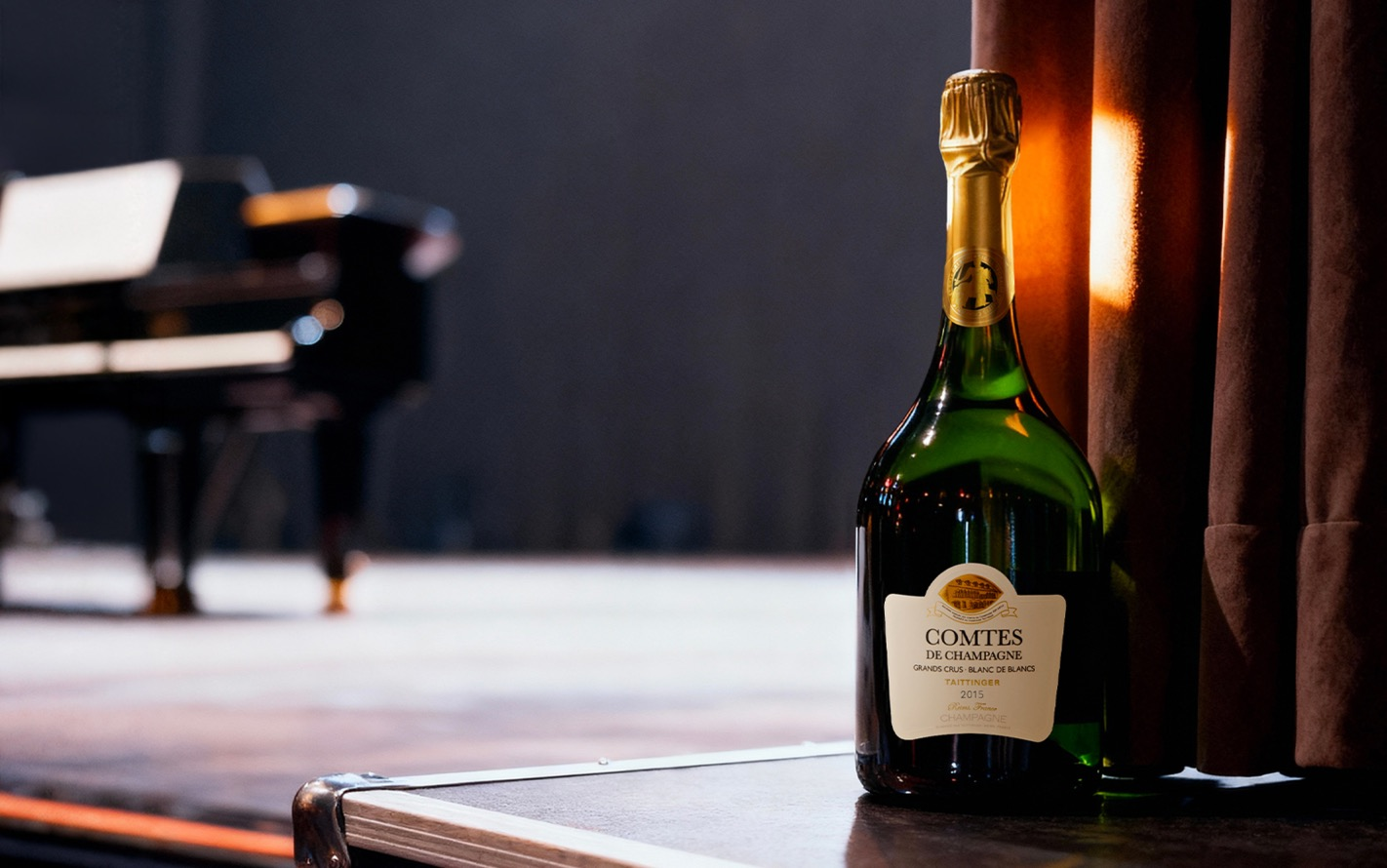
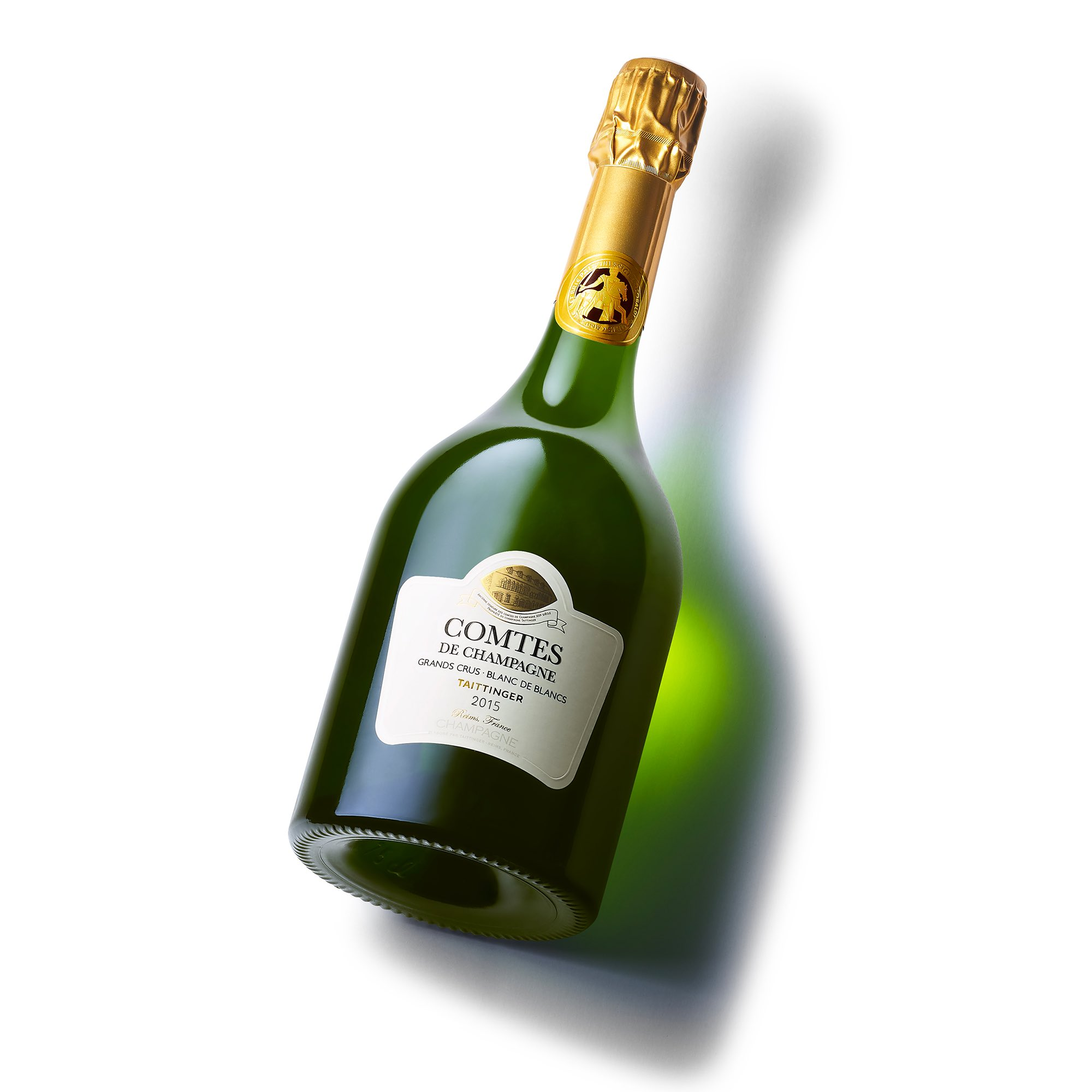
COMTES DE CHAMPAGNE BLANC DE BLANCS 2015
Gastronomy
COMTES DE CHAMPAGNE BLANC DE BLANCS 2015
The tale of a vintage told by its cellar master
To mark the release of the Comtes de Champagne Blanc de Blancs 2015, Alexandre Ponnavoy, Cellar Master for the Maison Taittinger, discusses the distinctive characteristics of this vintage, revealing the choices that shaped its creation and the vital role of time in forging its identity.
Why did you choose 2015 as a vintage year? What were the growing conditions like that year?
2015 is remembered for its accelerated growing season. The particularly mild winter gave way to a varied spring with a period of freezing temperatures followed by intense heat. The vines reached full bloom at the usual times, during a sunny and dry month of June. It was a glorious summer with plenty of sunshine and little rain. The ripening of the Chardonnays was given a boost at the end of August by some long-awaited rainfall. The crops were harvested in mid-September under the cool autumnal skies. At the time of the harvest, the grapes were in excellent condition, with a balance that suggested great potential.
However, the final decision to produce a Comtes de Champagne vintage isn’t made at harvest alone; it’s the fruit of a long, thoughtful process during the tasting of the base wines.
After getting to know the wines and moving on to the blending stage, the 2015 vintage delivered the exact standard we strive for in shaping the Comtes de Champagne’s identity. When crafting each new Comtes de Champagne vintage, we never compromise on finesse, tension or depth – qualities that shone through in the 2015 blend. The aromatic complexity and sheer ageing potential of the 2015 vintage left no doubt in our minds: we had to capture and preserve the memory of such an extraordinary year.
What happens to a Comtes de Champagne during its many years in the cellars?
First and foremost, a Comtes de Champagne doesn’t simply age during all those years in the cellars; it undergoes a transformation while drawing character from the unique atmosphere of the chalk cellars.
Initially, the fermentation process establishes the wine’s profile, while yeast autolysis adds texture and depth. Then time does its work, allowing the aromas to slowly unfurl. The fruit-forward character gradually yields to more complex notes of brioche, dried fruit, honey and spice.
Yet what matters most is that freshness remains the common thread throughout its years of cellaring. It simply evolves – becoming less overt, more profound and seamlessly integrated. Ultimately, that’s what we look for in a Comtes de Champagne across its many years in the cellar: not a wine that simply ages, but one that gains complexity without losing its energy.
Between 6 and 8 per cent of the wines that make up the Comtes de Champagne have been aged in barrels for four to six months. How does oak shape the character of the Comtes?
We use oak not to impart flavour, but as a vessel for ageing. It allows the Chardonnay to breathe very slowly, developing texture and depth while preserving the tension which is essential to the Comtes de Champagne. Through blending, we can calibrate the oak, spice and complexity to achieve the wine’s signature profile.
How do you decide when a Comtes de Champagne is ready to leave the cellars? What do you look for in a wine before deciding to release it?
Our decision to release a Comtes de Champagne vintage from the cellars doesn’t simply hinge on the time it’s spent on the lees. We only release it once the wine has found its aromatic balance and reached the right depth of complexity.
In every wine, we look for the signature that time leaves behind. But we still want to capture that initial freshness, intensity and energy. When the wine begins to suggest more than it shows – when the aromas are seamlessly integrated, the texture has gained true depth, and the finish retains that vibrant energy – only then do we feel it is ready to leave the cellar.
I’d say that time is our tool, but tasting remains the deciding factor.
Are you looking for a wine that has reached peak maturity, or one with years of ageing potential ahead?
As far as I’m concerned, the aim isn’t necessarily for the Comtes de Champagne to have reached its peak. I prefer a wine that has already found its balance, yet keeps enough energy, freshness and structure to continue evolving.
A great Comtes de Champagne should be a joy to drink now, but also offer a glimpse of its future potential. It’s this duality that is so fascinating: maturity on the one hand, and pure promise on the other.
So when we decide that a Comtes de Champagne is ready to leave the cellars, we aren’t looking to halt its development. We want to catch it at just the right moment – when the wine is already wonderfully complex, yet still has a long journey ahead.
What are the hallmarks of the Comtes de Champagne Blanc de Blancs?
Each Comtes de Champagne is, above all, an expression of terroir, Chardonnay, blending and time. This cuvée was born over 70 years ago from the firm conviction that finesse, freshness and depth can coexist in perfect harmony.
The story of each Comtes de Champagne vintage begins with a dialogue between five Grands Crus from the Côte des Blancs – Avize, Chouilly, Cramant, Oger and Le Mesnil-sur-Oger – which continues to unfold in the Saint-Nicaise chalk cellars for years to come.
Each of these crus brings its own character to the blend. Some provide tension and verticality, while others lend depth, texture or length.
The Comtes de Champagne embodies not only our vision of Chardonnay and our dedication to these great terroirs, but also – and above all – our philosophy of elegance and joy. Yet beyond the grape and terroir, it is the winemaking, the art of blending, and the passage of time that gradually forge its identity.
Underpinned by this bold personality, each vintage writes a new chapter in the Comtes de Champagne cuvée’s story. Rather than replicating an identical style year after year, every edition expresses that same philosophy through the lens of a different season.
And what are the signature touches unique to 2015?
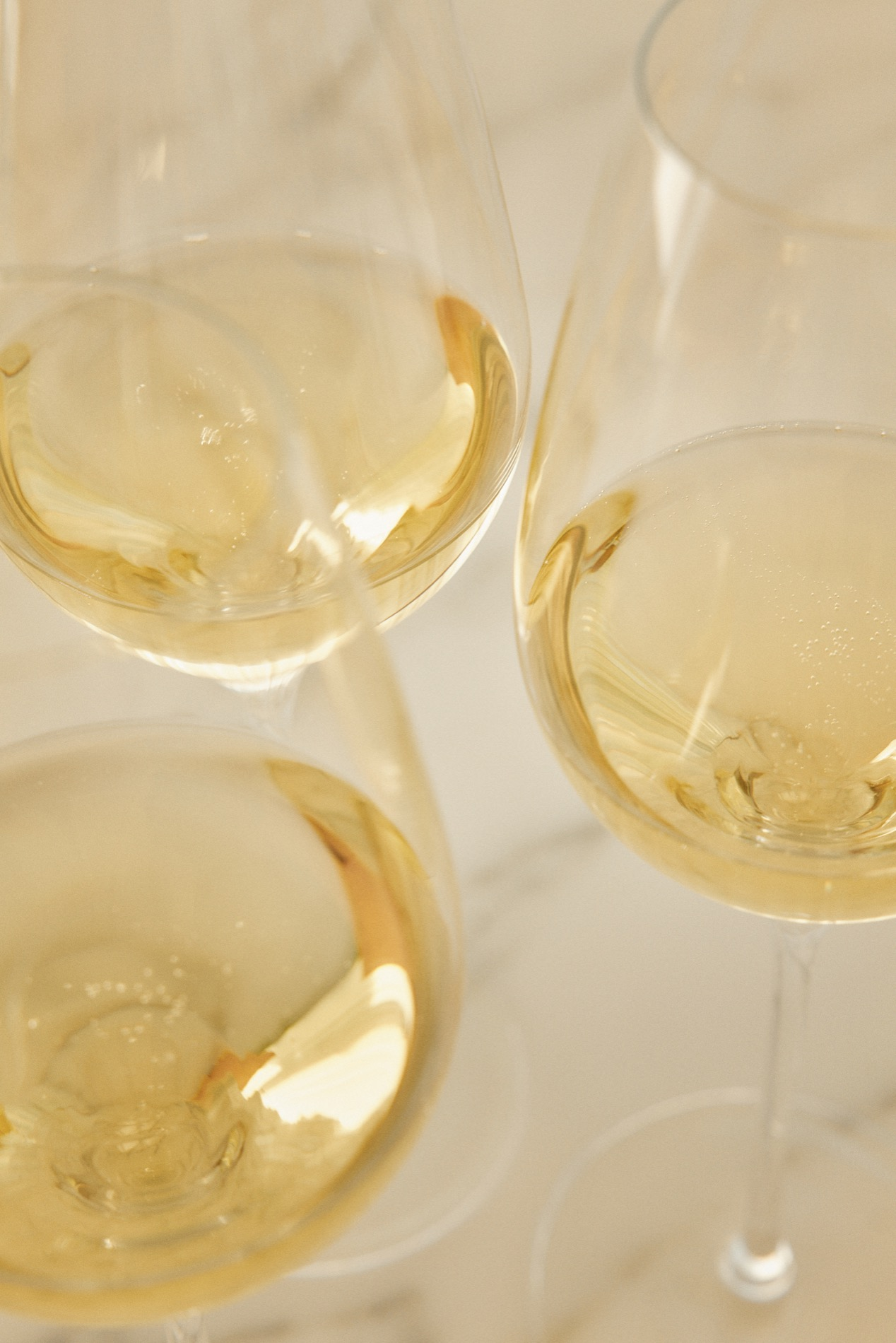
The robe is crystal clear, with a sparkling yellow colour and slight flashes of green. Its bubbles are fine and delicate, with an almost silky texture.
On the nose, we encounter a Comtes de Champagne that opens with an iodine, mineral, slightly spiced feel. These aromas take us straight back to the emotion of that very special year, 2015. Then the inviting nose expands into toasted notes of brioche and pastries flavoured with hazelnut and almond. Once the wine has breathed, the 2015 vintage expresses its full energy in notes of lemon, bergamot, white flowers and ripe white fruit.
On the palate, the bubbles leave a gentle caress with a hint of softness and rounded generosity. The Comtes de Champagne 2015 boasts a lively, rich and fruity palate. With citrus influences and vegetal notes, it offers a truly excellent balance of structure and sophistication.
Off the top of your head, what food pairings come to mind?
For everyday simplicity, fine oysters, sea bream or sea bass tartare
For pure indulgence, sea bass with beurre blanc, sole meunière or creamy risotto
For haute cuisine, spiny lobster tail with Champagne sabayon; scallop carpaccio with hazelnut oil, yuzu zest and fleur de sel
For many people, the Comtes de Champagne cuvée is the bottle saved for milestone moments in life. But you’ve been tasting it professionally for years – is there a bottle, vintage or moment that truly stands out for you?
Here at Maison Taittinger, we have the privilege of working on a timeless cuvée that is rare and unique in both its origins and approach. A vintage that has been passed down from generation to generation and that really strikes a chord with us.
If I had to pick one standout moment, it would be a Comtes de Champagne 1988, shared with my predecessor during a library tasting to monitor our older vintages.
Tasting that vintage revealed the full depth of what it takes to pass on this craft: years of contemplation, technical precision and unwavering care – along with that quiet touch of magic only time can bestow.


Read more